Garage Floor Coating Troubleshooting
Why Is My Garage Floor Peeling Only a Year After Installation?
Peeling after a recent garage floor coating installation is frustrating—but it usually points to a preventable adhesion, moisture, or application issue. Learn what may have gone wrong and what to examine before repairs begin.
Early Peeling Usually Signals an Adhesion Problem
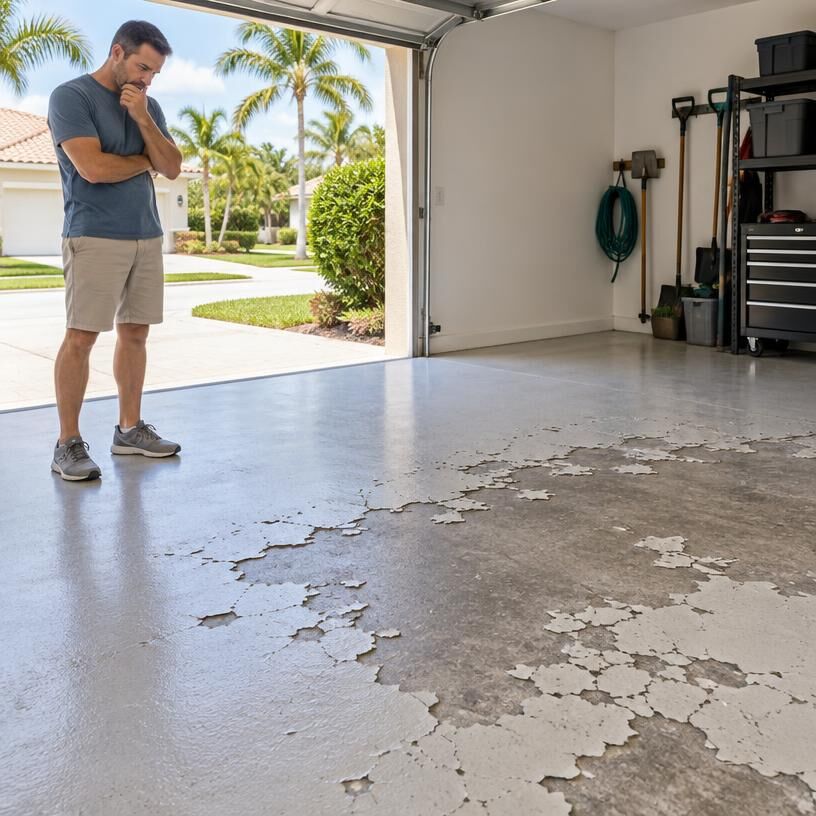
A properly installed polyaspartic garage floor coating should form a durable bond with the concrete, so peeling within the first year is not typically normal wear. In South Florida, high humidity, moisture vapor moving through the slab, and preparation shortcuts can all interfere with that bond. The coating may lift in small chips, broad sheets, or areas near cracks and tire paths, with the pattern often offering clues about the source of the failure.
The most common causes include concrete that was not mechanically prepared to the right surface profile, moisture trapped beneath the coating, or contaminants such as oil, grease, dust, sealers, and curing compounds left on the slab. Installation conditions matter as well: incorrect component ratios, incomplete mixing, applying material too thickly, or coating outside the manufacturer’s recommended temperature and humidity range can weaken the system. A professional evaluation can identify whether the failure is localized or widespread and determine the right repair approach.
Installation Issues That Can Lead to Peeling
Insufficient Surface Preparation
Concrete must be thoroughly cleaned and mechanically ground or profiled so the coating can anchor to a sound, porous surface. Coating over smooth, weak, dusty, or improperly prepared concrete can cause premature delamination.
Moisture or Surface Contamination
Moisture vapor beneath the slab, condensation on the surface, or leftover oil, grease, paint, sealers, and curing compounds can block adhesion. South Florida’s humid climate makes moisture testing especially important before installation.
Mixing and Application Errors
Polyaspartic products require accurate mix ratios, complete blending, proper recoat timing, and the correct film thickness. Improperly mixed material or application in unsuitable conditions may leave the coating under-cured, brittle, or poorly bonded.
South Florida Weather Can Stress a Garage Floor Coating
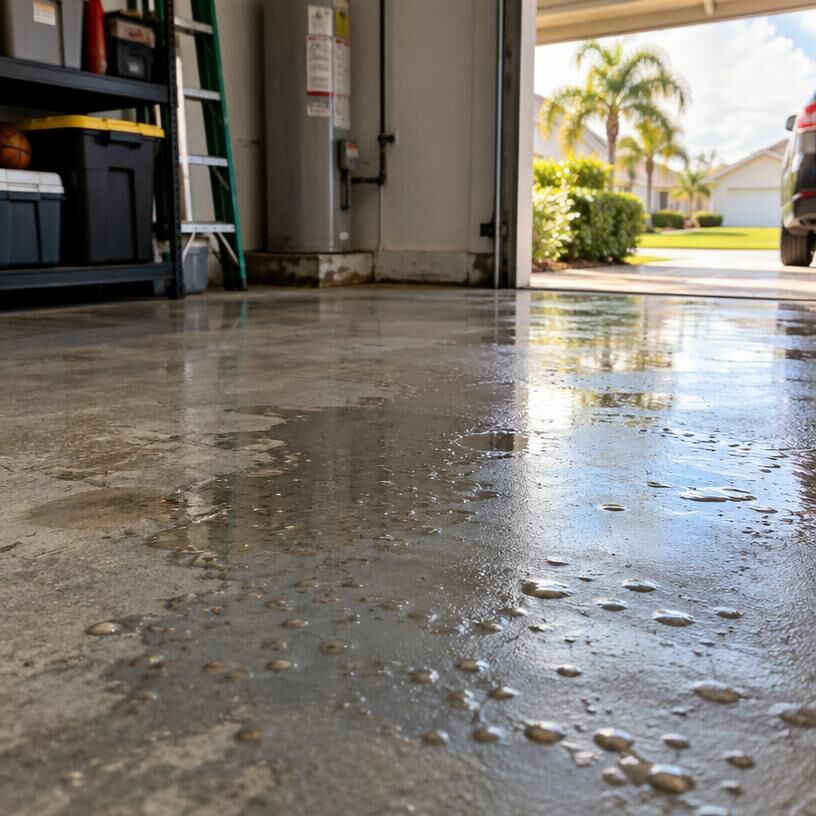
A garage floor coating can look flawless at first, then begin peeling when the slab and coating are repeatedly exposed to South Florida’s demanding conditions. High humidity and frequent rain can keep concrete moisture levels elevated, especially in garages with poor drainage, open doors, or slabs without an effective vapor barrier. When moisture moves upward through the concrete, it can push against the bond between the slab and the coating.
Intense heat also causes concrete and coatings to expand, while cooler nights, storms, and air-conditioned adjacent spaces can create rapid temperature shifts. Over time, that movement may weaken an installation that was applied to a damp slab, inadequately prepared surface, or coating system not suited to the environment. Pooling water, hot tires, and wind-driven rain can further expose vulnerable areas and turn a small adhesion issue into visible peeling.
Moisture Is Often Hidden Below the Surface
Peeling does not always mean the coating itself is defective. The underlying concrete may be releasing moisture, salts, or vapor long after installation. In South Florida, slabs can retain moisture from seasonal rainfall, high groundwater, irrigation overspray, and humid air. If surface preparation did not fully remove contaminants, profile the concrete correctly, or account for vapor transmission, the coating may lose its grip from below.
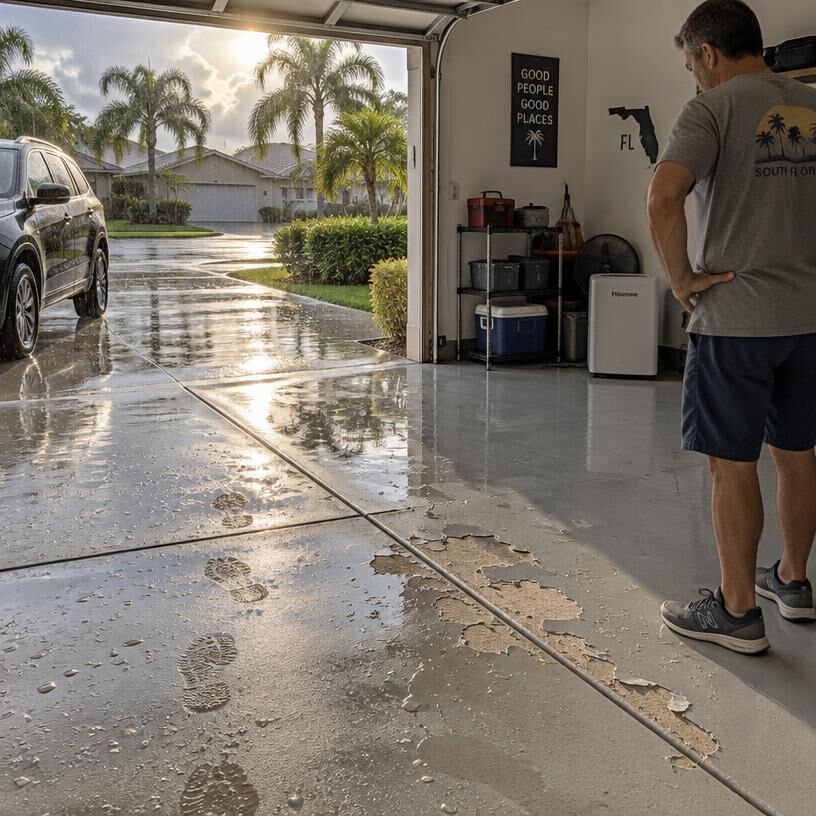
Look closely at the pattern. Peeling near exterior walls, garage doors, cracks, drains, or areas where water collects can point to a moisture-related cause. A professional evaluation can distinguish between ordinary surface wear, localized preparation issues, and broader slab-moisture concerns before recommending the right repair approach.
Map the Peeling Areas
Start by noting exactly where the coating is lifting. Mark areas near the garage door, exterior walls, cracks, drains, tires, storage shelves, and water-prone corners. A clear map helps reveal whether the problem is isolated or spreading across the slab.
Examine the Edges and Surface Pattern
Look for curling edges, blisters, flakes, bare concrete, or peeling that follows cracks and joints. Check whether the coating comes off in small chips, large sheets, or circular patches. The shape and location of the failure can offer useful clues about wear, impact, moisture, or weak adhesion.
Check for Water and Moisture Clues
Inspect the garage after rain, washing vehicles, or running irrigation. Look for damp concrete, puddling, darkened areas, white powdery deposits, rust marks, and peeling concentrated around the perimeter. Photograph anything that suggests water is entering from above or moving through the slab.
Document Changes Before Calling a Pro
Take dated photos from several angles and note when you first noticed the peeling, whether it worsens after rain, and any recent changes in the garage. Avoid aggressively scraping or pressure washing the damaged area. Share your notes and photos during a professional assessment for a more accurate diagnosis.
What the Peeling Pattern May Be Telling You
Compare the appearance and urgency of common garage floor coating issues. While a visual review can help you understand the likely cause, a professional inspection is the best way to confirm why a polyaspartic floor is failing.
Type of Condition
Typical Appearance
Likely Cause
Urgency
Recommended Next Step
What It Usually Means
Normal Wear
Light scuffs, dull traffic paths, or minor scratches without lifting edges
Everyday tire traffic, dropped tools, abrasive debris, or routine use
Low—monitor unless damage reaches bare concrete
Clean the surface and document areas that worsen over time
The coating is generally still bonded; the issue is cosmetic rather than a system-wide failure
Frequently Asked Questions About Peeling Garage Floors
Understand what may be causing your garage coating to peel and what options are available to restore a durable, attractive surface.
Can peeling polyaspartic garage flooring be repaired?
Yes, localized peeling can sometimes be repaired when the surrounding coating remains firmly bonded and the underlying concrete is sound. A professional inspection determines whether a targeted repair will blend properly and provide lasting adhesion.
When does a peeling garage floor need complete coating removal?
Full removal is often recommended when peeling is widespread, moisture has affected the slab, or the original coating has poor adhesion across multiple areas. Removing failed material allows the concrete to be properly prepared before a new system is installed.
Why would a garage floor peel only one year after installation?
Early peeling is commonly linked to inadequate concrete grinding, moisture vapor issues, surface contamination, improper crack repair, or coating applied outside the correct temperature and humidity conditions. South Florida’s moisture levels can make proper testing and preparation especially important.
How long should a properly installed polyaspartic garage floor last?
A professionally prepared and installed polyaspartic floor can last many years with normal residential use. Its lifespan depends on the condition of the concrete, moisture control, traffic levels, maintenance, and whether the coating system was installed according to manufacturer specifications.
Can moisture cause a new garage coating to peel?
Yes. Moisture moving through concrete can weaken the bond between the slab and coating, leading to bubbling, delamination, or peeling. Moisture assessment helps identify whether vapor transmission or other water-related concerns must be addressed before recoating.
Will a new polyaspartic coating adhere over the peeling areas?
Applying a new coating over loose or poorly bonded material is not a reliable solution. Failed areas must be removed, the concrete mechanically prepared, and any underlying issues corrected so the replacement coating has a stable surface to bond to.
South Florida Garage Floor Restoration Services
Professional Coating Failure Inspection
Identify the source of peeling, bubbling, cracking, or delamination with a detailed evaluation of your existing garage floor coating and concrete substrate.
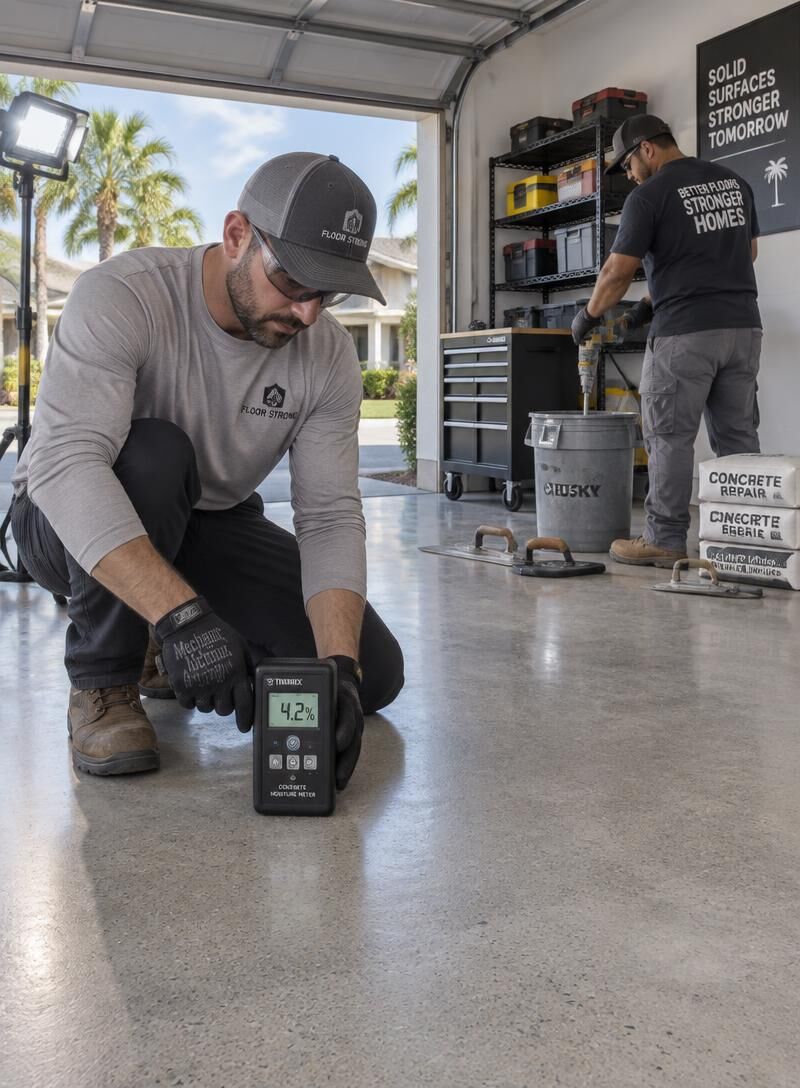
Concrete Preparation & Moisture Assessment
Prepare the slab through professional grinding and surface cleaning while assessing moisture-related conditions that can compromise adhesion in South Florida garages.
Polyaspartic Floor Repair & Reinstallation
Remove failed coating, repair damaged concrete, and install a properly bonded polyaspartic flooring system designed for a clean, durable garage finish.
Find Out Why Your Garage Floor Is Peeling
Don’t cover up a failing coating without addressing the cause. Request a professional garage floor assessment to determine the right repair or replacement solution and learn how thorough preparation can deliver a longer-lasting polyaspartic finish.