South Florida Garage Floor Guide
Epoxy vs. Polyaspartic: Which Garage Floor Coating Performs Better?
Compare the performance, appearance, and installation demands of epoxy and polyaspartic coatings in South Florida’s heat, humidity, and high-UV conditions.
Understanding the Core Differences
How Epoxy and Polyaspartic Garage Floor Coatings Compare
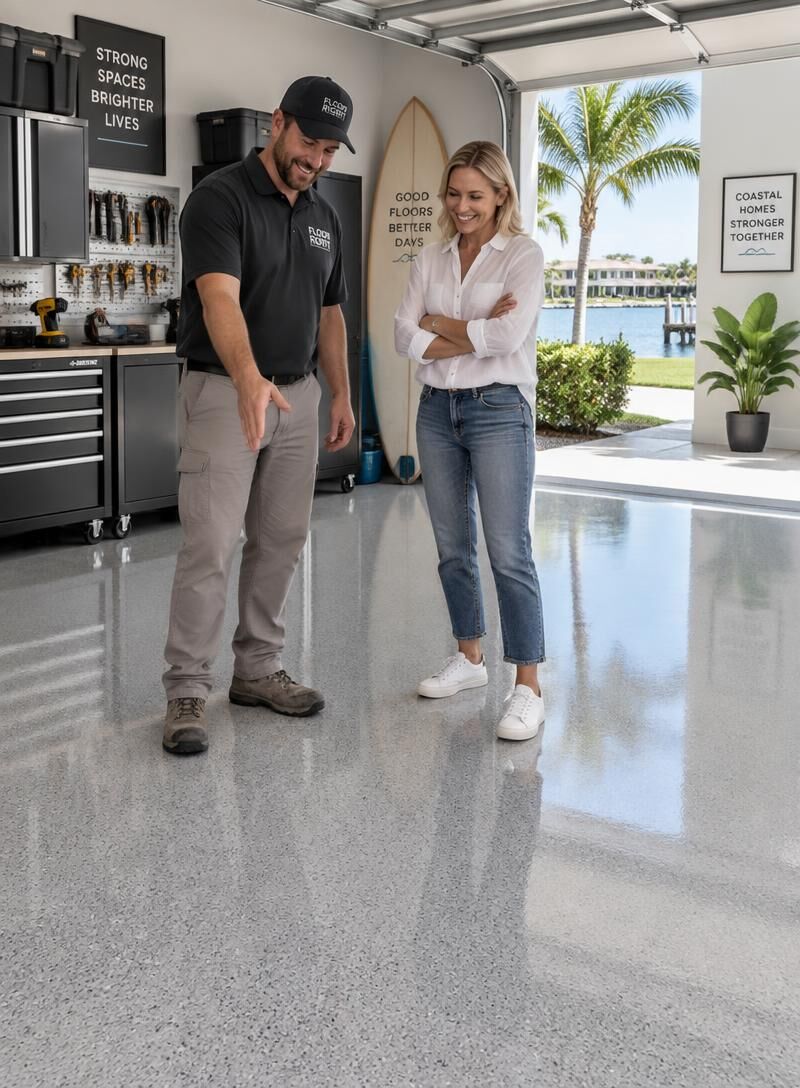
Epoxy and polyaspartic coatings can both transform a bare concrete garage into a cleaner, more attractive, and more durable surface, but they are made differently and perform differently in South Florida conditions. Epoxy is a resin-based coating system created by combining epoxy resin with a hardener. It has long been a popular choice for garages because it builds a thick, protective layer that resists many common chemicals, stains, and impacts. Epoxy typically cures more slowly than polyaspartic material, often requiring several days of suitable temperatures and dry conditions before the floor can return to service.
Polyaspartic is an advanced polyurea-based coating engineered for faster curing and greater flexibility. Its rapid cure time can allow professional installation and return to use in a much shorter window, while its flexibility helps it accommodate normal concrete movement. This is especially valuable in South Florida, where intense sun, heat, humidity, and moisture vapor can challenge conventional floor systems. Polyaspartic coatings also offer excellent UV stability, helping the floor retain its color and finish instead of yellowing or fading in sun-exposed garages.
Epoxy can still be a practical option for certain indoor, climate-controlled spaces or projects where a longer installation timeline is acceptable. However, for residential garages, commercial spaces, and areas exposed to bright light or demanding daily traffic, polyaspartic is often the stronger long-term choice. Proper concrete preparation remains essential for either system: the slab must be mechanically prepared, repaired where needed, and tested for moisture conditions to achieve dependable adhesion.
Epoxy vs. Polyaspartic for South Florida Garage Floors
Performance Factor
Epoxy Coating
Polyaspartic Coating
Best Choice for South Florida
Durability
Strong, rigid protective layer with good chemical and abrasion resistance
Highly durable, flexible, and resistant to impacts, abrasion, and hot-tire pickup
Polyaspartic for demanding daily use and concrete movement
UV Resistance
Can amber, yellow, or fade when exposed to sunlight over time
Excellent UV stability helps preserve color and gloss
Polyaspartic for sunlit and open garages
Installation & Moisture
Slower cure time; humidity and slab moisture can complicate installation
Fast curing; professional systems offer better tolerance for variable site conditions
Polyaspartic for faster installation in humid South Florida conditions
Why Polyaspartic Performs Better in South Florida Garages
UV & Heat Resistant
Unlike many traditional coatings, polyaspartic finishes resist yellowing and fading under intense Florida sunlight while maintaining their appearance through high garage temperatures.
Moisture & Humidity Ready
Its advanced formulation performs reliably in humid conditions, helping create a durable bond to properly prepared concrete without the extended wait times often associated with epoxy.
Polyaspartic floor coatings are engineered for demanding garage environments, delivering fast installation and lasting protection against South Florida’s heat, humidity, sunlight, spills, and daily vehicle use.
Chemical & Stain Protection
Oil, gasoline, tire marks, household chemicals, and everyday spills are easier to clean from a seamless polyaspartic surface that resists staining and surface damage.
Built for Vehicle Traffic
Polyaspartic coatings create a hard-wearing, impact-resistant garage floor designed to stand up to hot tires, parked vehicles, tools, and frequent foot traffic.
Where Epoxy Can Fall Short in South Florida
Epoxy remains a familiar garage-floor option, but South Florida’s climate can expose its limitations. Prolonged UV exposure may cause some epoxy systems to amber or yellow over time, particularly near open garage doors or sunlit windows. Epoxy also typically requires a longer cure period, which can keep your garage out of service for several days.
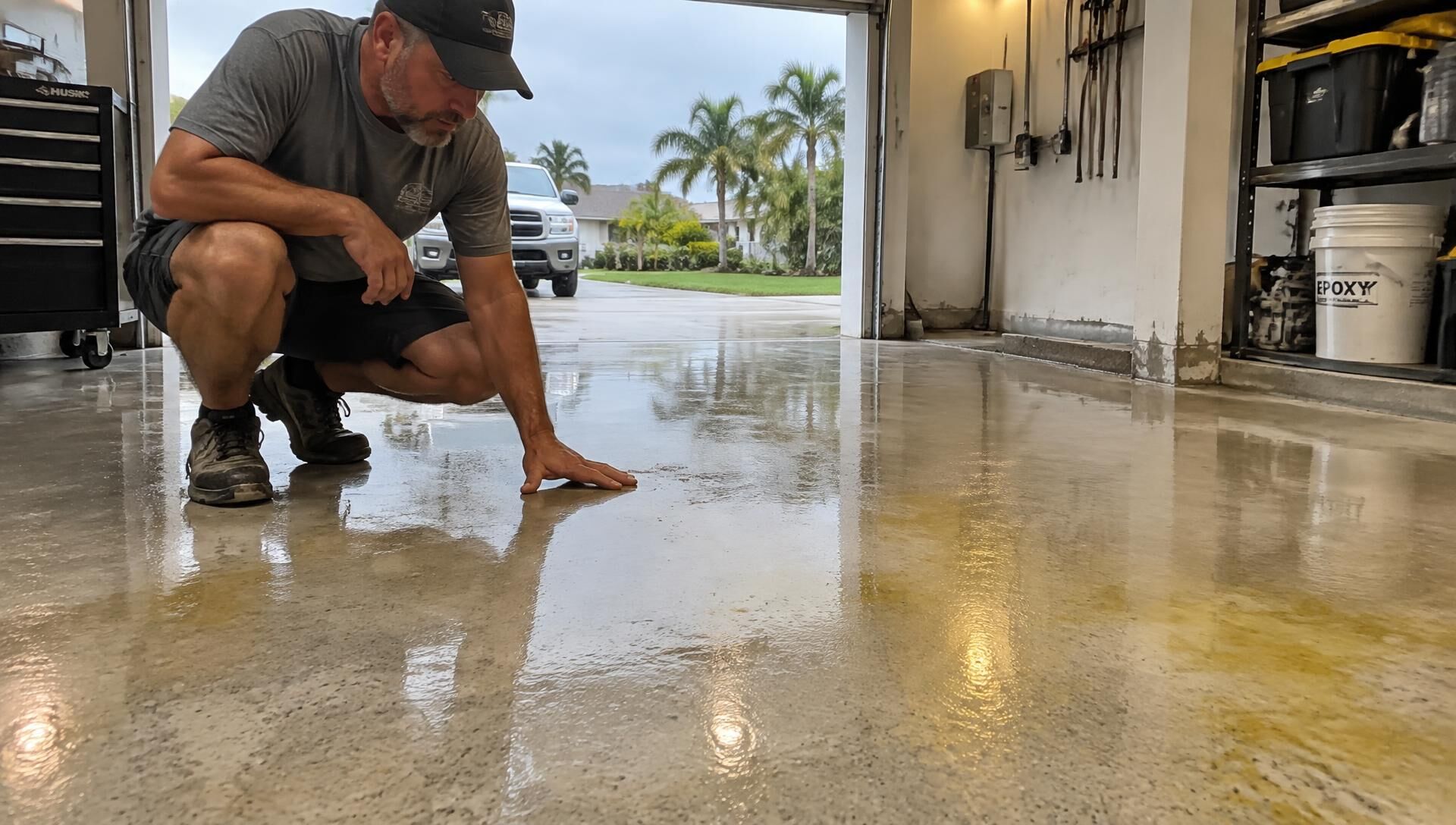
Moisture is another important consideration. Concrete can retain moisture in humid climates, and improper preparation or unsuitable installation conditions may affect adhesion and long-term performance. Heat, humidity, changing temperatures, and heavy vehicle traffic can all place added stress on a conventional epoxy floor. A professionally installed polyaspartic system is often the more practical choice for homeowners who want a faster return to service and dependable protection built for Florida conditions.
How a Professional Garage Floor Coating Is Installed
A lasting garage floor starts with meticulous concrete preparation. Each stage is completed to create a clean, properly bonded, durable finish that is ready for everyday use.
1
Prepare & Repair the Concrete
The floor is mechanically ground to remove contaminants and create the right surface profile. Cracks, pits, and damaged areas are repaired before coating begins.
2
Apply the Base Coat & Flakes
A penetrating primer and polyaspartic base coat are applied for strong adhesion. Decorative vinyl flakes are then broadcast across the surface for color, texture, and coverage.
3
Seal With a Protective Topcoat
After excess flakes are removed, a durable clear polyaspartic topcoat is applied to enhance chemical resistance, UV stability, and long-term protection against daily garage traffic.
Epoxy vs. Polyaspartic Garage Floor FAQs
Get clear answers about cost, installation, durability, maintenance, traction, and choosing the right coating for South Florida garages.
Is polyaspartic more expensive than epoxy flooring?
Polyaspartic flooring typically has a higher upfront cost than basic epoxy, but its faster installation, UV stability, and long-term durability can deliver greater value. Your final price depends on the garage size, concrete condition, color system, and any needed repairs.
How long does epoxy or polyaspartic installation take?
Traditional epoxy systems often require several days for installation and curing. Professionally installed polyaspartic coatings can commonly be completed in as little as one day, minimizing downtime for your home, business, or commercial garage.
Which coating is more durable in South Florida garages?
Polyaspartic coatings are an excellent choice for South Florida because they resist hot-tire pickup, stains, impacts, moisture, and UV exposure. Epoxy can be durable indoors, but polyaspartic generally performs better where heat, humidity, and sunlight are concerns.
Are polyaspartic garage floors easy to clean and slip resistant?
Yes. Both epoxy and polyaspartic floors are easy to maintain with routine sweeping and occasional mopping. A professionally installed polyaspartic system can also include decorative flakes and a textured finish to improve traction without making the floor difficult to clean.
What South Florida Property Owners Are Saying

“Our garage went from stained and unfinished to a clean, polished space we are proud to show off. The flake finish looks incredible, and the floor still looks new after daily use.”

“The installation was remarkably fast and professional. We were able to use our garage again quickly, and the polyaspartic coating has held up beautifully through heat, humidity, and busy family life.”

“I wanted a durable floor that would not peel under hot tires. This coating has exceeded expectations—easy to clean, tough enough for my tools, and much brighter than bare concrete.”
“The team helped us choose a finish that matched our home perfectly. Even with the garage door open and plenty of Florida sunlight, the color has remained crisp and attractive.”
“We needed a professional floor solution with minimal disruption to operations. The finished polyaspartic surface is durable, safer underfoot, and gives our workspace a much more professional appearance.”
Find the Right Garage Floor Coating for Your Property
Request a professional consultation for a customized epoxy or polyaspartic recommendation. We will evaluate your concrete, usage needs, and South Florida conditions to help you choose a durable coating for your residential or commercial garage.